Loading print…
Scotland
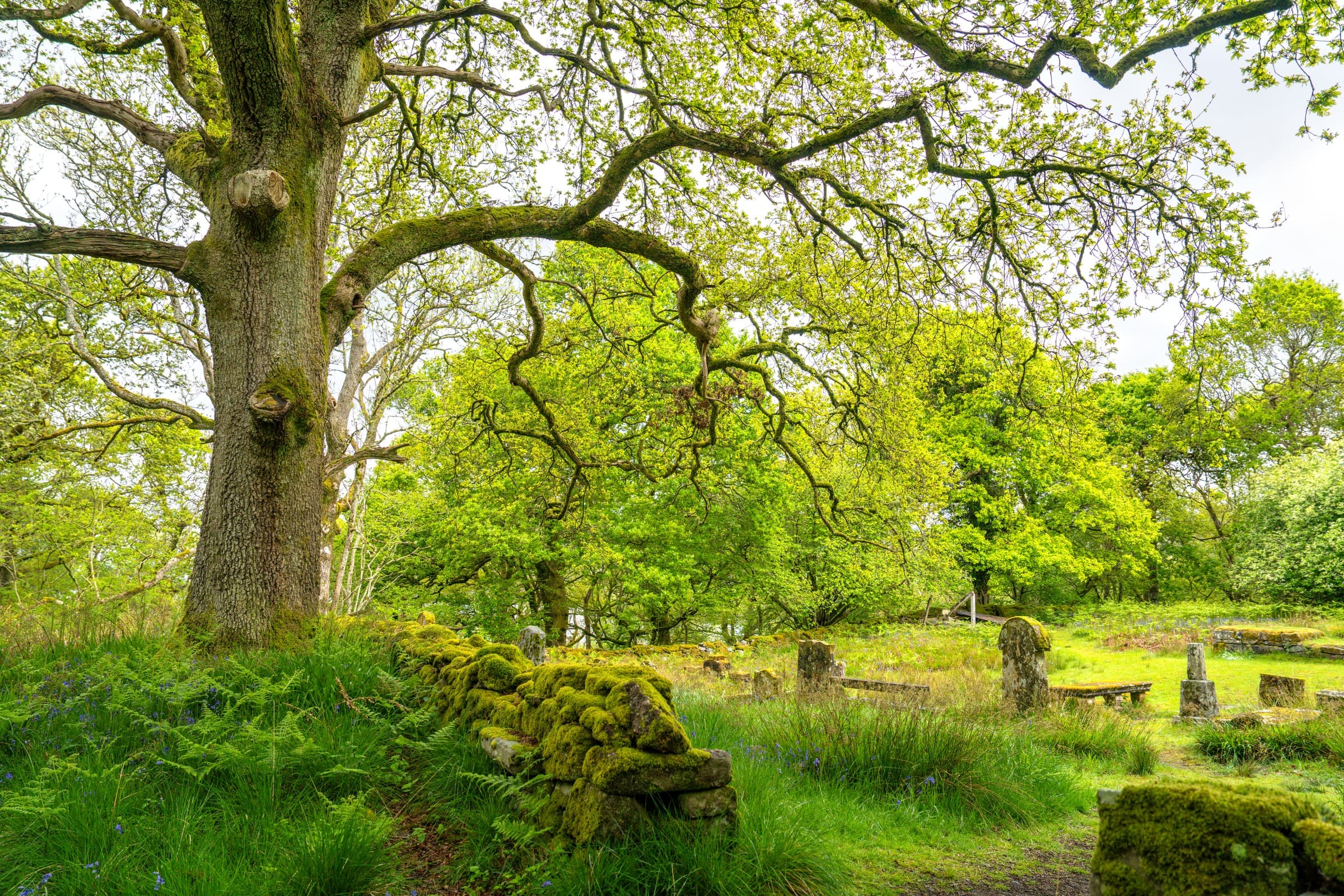
Historic Oak
This beautiful oak grows over a 14th century settlement and grave site. It is on an island in the famous Loch Lomand where it might have had some protection from the resource demands of the ship building industry that stripped much of the natural forest of Scotland and England.
Hear the story· 1:17
The reason that this photograph is in the exhibition is that I'm fascinated with the story of wood that's survived and still exists in shipwrecks. If you dive on the Georgette on the right day where there's not much sand over it you might be lucky enough to see remnants of what they call the ceiling which was the wooden lining around the inside of the hull and there are some planks there and when they're visible you can see the grain in the wood you can see the planks clearly lined up side by side. It's incredible that after 150 years they're still there and they're not done yet. If you think about the life of that wood, the tree that it came from and where it's origins may have began, the seedling that created the tree that produced the wood that now lies at the bottom of a Calgardup Bay could have sprung to life 300 years ago or more. So you're seeing and able to touch something that actually predates the arrival of Europeans in this country. When I first realized that after talking to an indigenous elder Zach Webb, it made be think about the timber in the shipwreck in a completely different way. This picture is of an oak tree over an ancient Scottish burial ground on an island in Loch Lomond.
Edition of 10